Advocacy
HB1805 Cesspool Conversion at Point of Sale and Why its Bad For Hawaii Homeowners (2022)
From the archives: my 2022 article on HB1805 and cesspool conversion at point of sale, with the original note linking to the 2026 update.
Important Note: the article below is from legislation that was defeated in 2022. Since then there have been several updates from the FBI and others, here is a link to 2026 updates: https://www.linkedin.com/pulse/cesspool-legislation-update-understanding-policy-landscape-owens-zm9vc/ BUT PLEASE READ BELOW TO HAVE A FULL UNDERSTANDING BEFORE GOING ON TO MY 2026 UPDATES.
Aloha, Lance Owens (RS), bringing you up to speed on HB1805 - better known as "Cesspool to Septic Conversion at Point of Sale" .
We all know the importance of clean ground water and safe beaches, so I struggled with starting my article in this way, then I realized it would not be an accurate article without you knowing all the facts. So lets look back a few months, as this bill was being drafted. State Senate Majority Leader Kalani English and Ty Cullen were under investigation for accepting bribes (cash, casino chips, and Vegas hotel rooms), to influence Cesspool legislation. At some point last year Kalani was caught and secretly agreed to cooperate with the FBI - resigning from his official position in the State Senate, and earlier this week, the two plead guilty to accepting these bribes. Both face up to 20 years in prison and $250,000 in fines.
excerpts from FBI release: "the defendants defrauded the citizens of the State of Hawaii of their right to honest and faithful services as elected legislators through bribery and concealment of material information"
"charged by the U.S. Department of Justice with accepting bribes to support and kill legislation on behalf of a Hawaii industrial services company angling to benefit from state cesspool regulations and policies, according to documents filed in U.S. District Court today" .
Now lets jump back to 2017 : Act125 became law and with it was created the the "Cesspool Conversion Work Group" (CCWG) they are 3 years into research, and its final report due out later this year. This is important to know up front, because the same people that have been on the CCWG for all these years, are the ones now trying to bypass the study. Lets get up to speed on the current Bill.
HB1805 as introduced, all homes on Cesspool will be required to convert Septic or Sewer at Point Of Sale - beginning Jan 2024:
Perspective: Today there are 971 homes actively in a real estate transaction on the Big Island. Of those- 618 (under HB1805) would need to be converted prior to being sold, in everyday life, that would be in approx. 45-60 days from now.
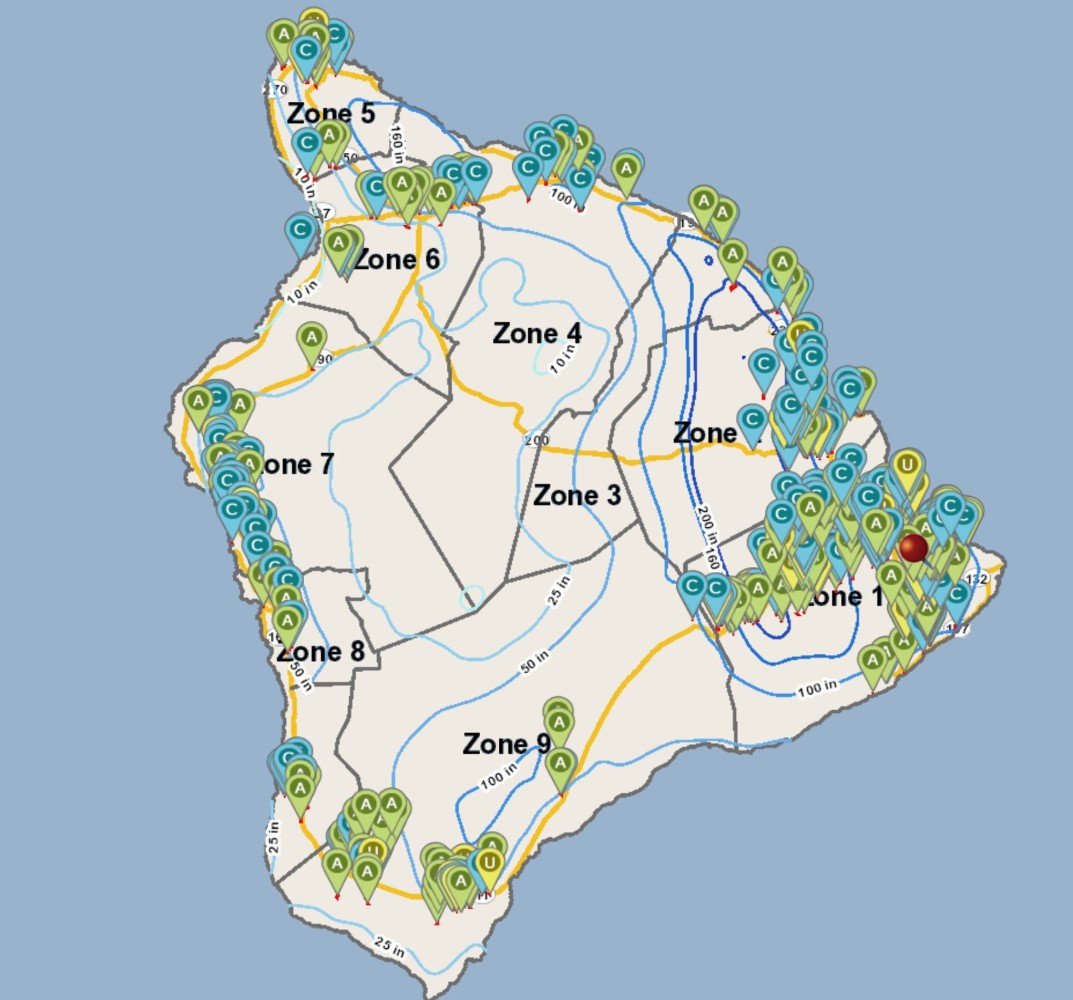
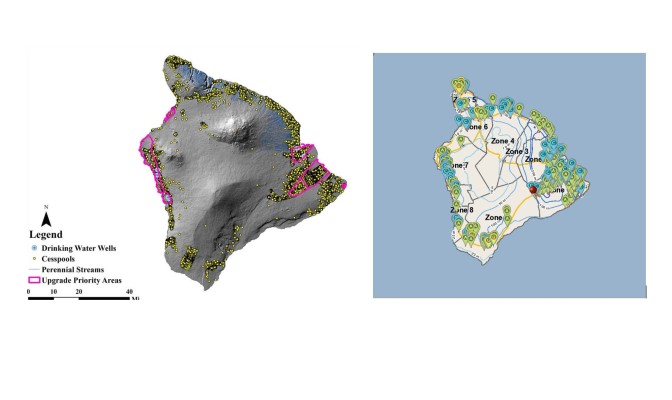
The "Pins" on the map below, represent the 618 properties that will need a Civil Engineer, Contractor, Permits, Workers, 618 Septic Tanks, Wastewater Division Approval and installation - all in 45 days, maybe 60 days. This task is physically impossible to undertake. As I type - Hawaii County permitting department is trying to figure out how to close 40,000 open permits in the EPIC system.
Update: As of February 16, 2022, we have 2 amendments to Bill1805
1st amendment: To extend the conversion to be completed within 12 months of Point Of Sale... Take all the "pins' above, and multiply it by 12 (months), reduce the number some to actual sales based off of 2021, it would be somewhere in the number of 2,500 cesspool conversions a year, 208 a month, or 52 a week - try and get that done! Its not going to happen. Now what? When buyers try to get loans on these homes, appraisers will “Flag” homes with pending conversions, banks will not loan on them until the conversion is completed. Reasons: 1:Homebuyers typically do not have $20k to do the conversion, making it a risky loan. 2:The possibility of fines and liens stacking up on the homes increases the chance of the buyer going into foreclosure - banks wont loan on a high risk areas where State liens can supersede the bank mortgage - this happened in 2005 and will happen in 2024.
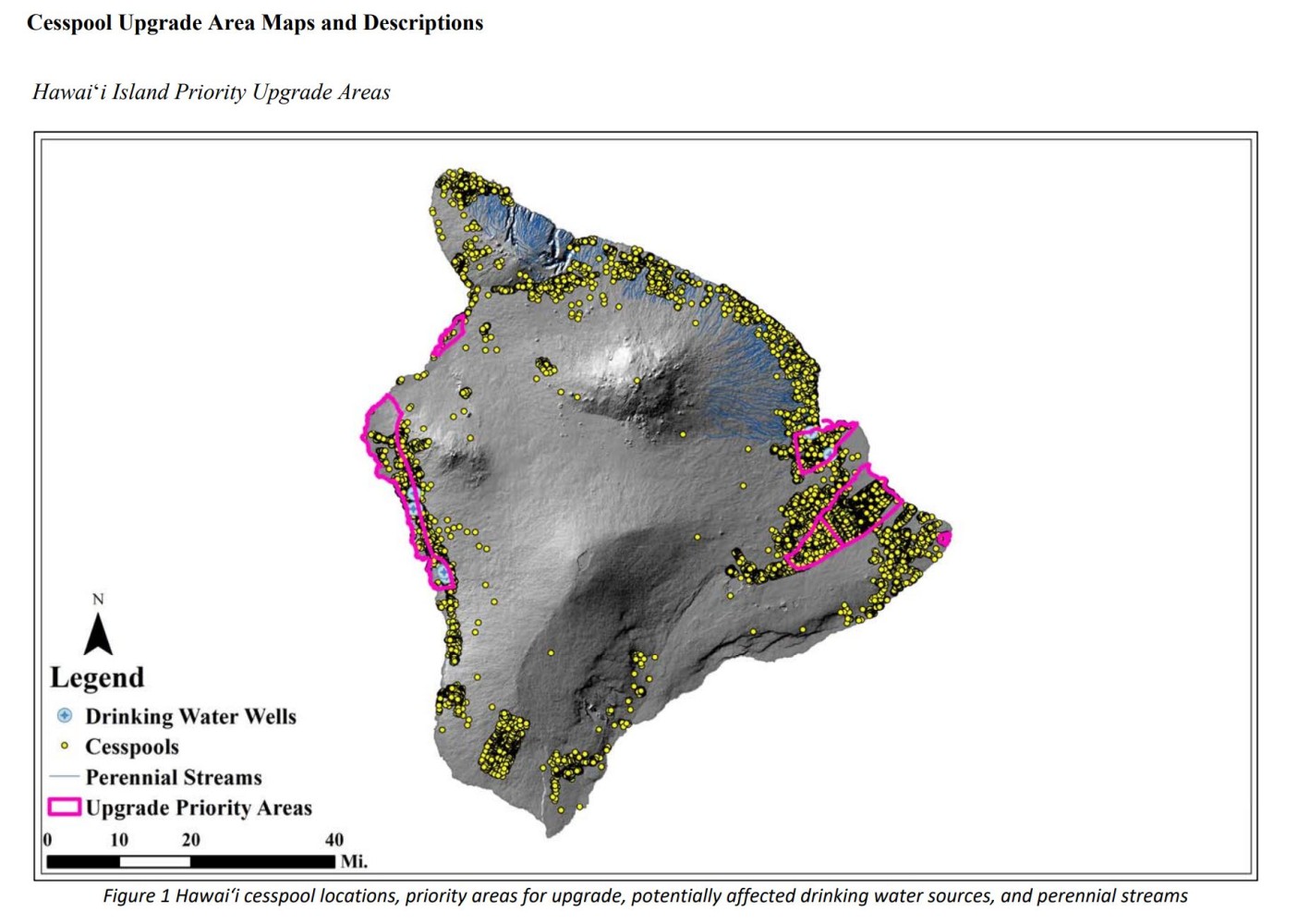
2 amendment: Those in "one thousand feet of a shoreline, perennial stream, wetland, drinking water well, or sensitive body of water."... Can you look at the map above and tell me where that is? That is exactly what they are counting on. The use of this language is to distract you, believing it will mainly be homes within 1000 feet of the shoreline, and they are counting on that ignorance.
I am going to help you "get it" . Take a look at ACT125 - (map below)
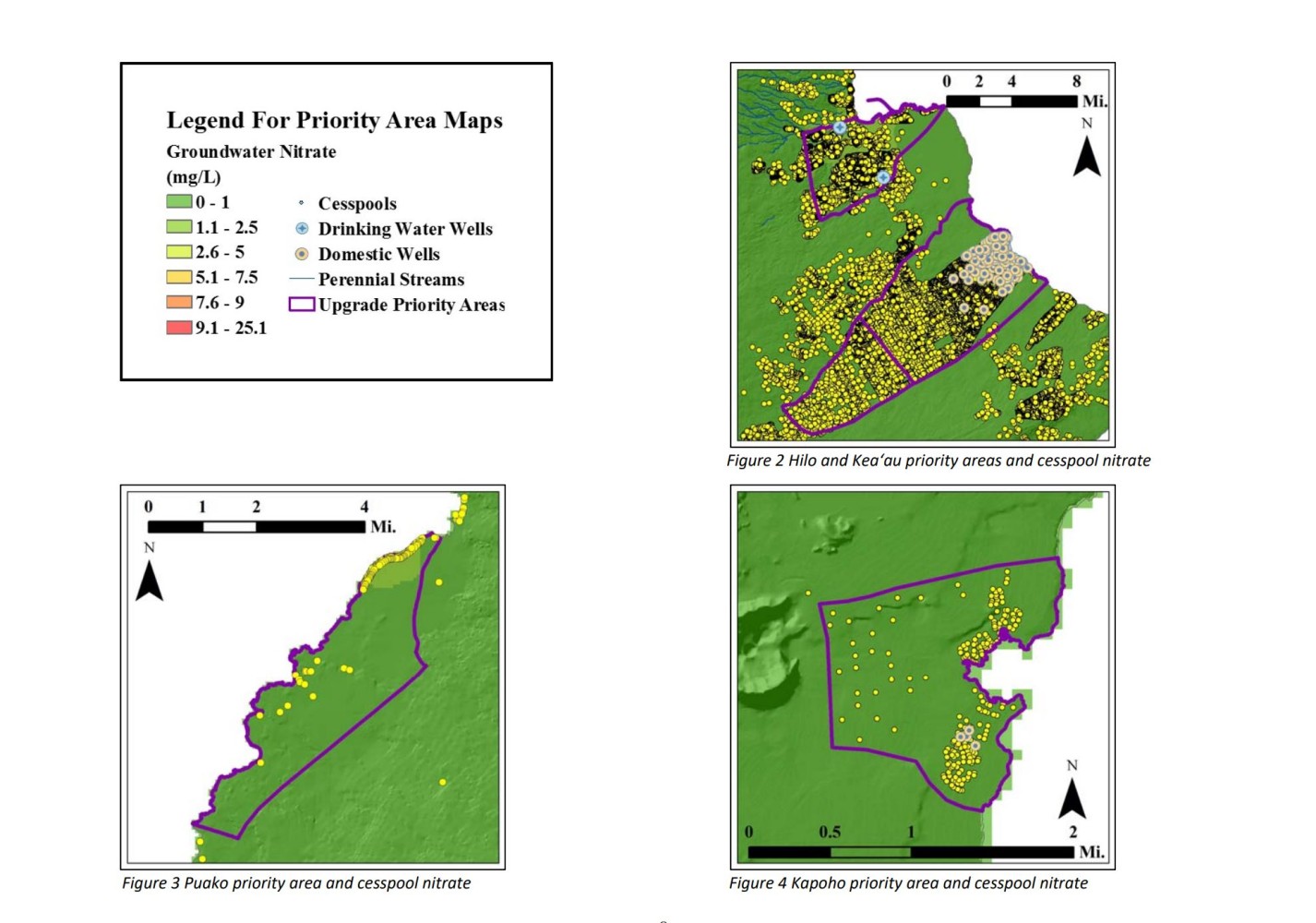
It clearly shows what those words mean: "within one thousand feet of a shoreline, perennial stream, wetland, drinking water well, or sensitive body of water." . Now overlay the map to the left ( Cesspool Conversion Working Groups map) - to the Active Real Estate map, and they come close to mirroring each other. By adding that language, you would think, "hey a 1,000 feet from the shoreline, that's the rich people anyway, they can afford it" but by looking at the two maps - its almost 80% of the homes out there, and many are under the $549,000 median home price. Do you have $20k to upgrade - you better if you want to sell your home.
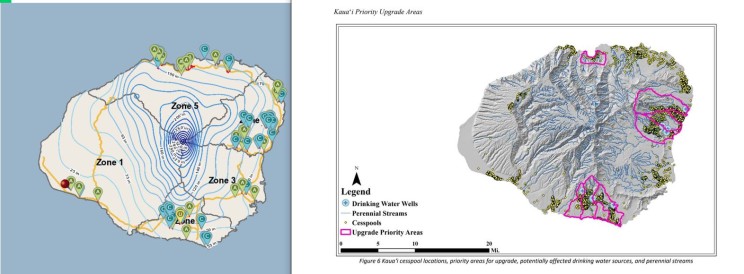
I want to be clear here, I am not making any accusations, what I am doing is stating Facts, and asking Questions. All the statements have links to the source. If you have answers that deal with the facts, please share the links in the comment section.
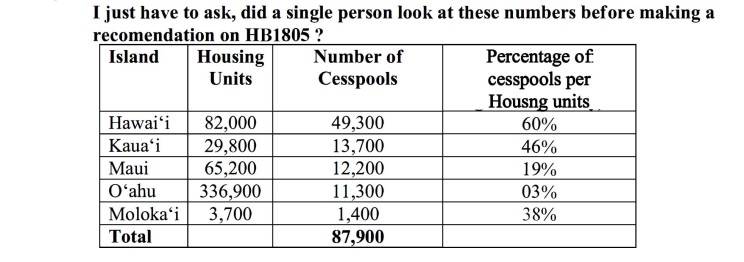
In the next paragraph, you may ask why we are talking about WAI, its because every time I reach out to someone on this Bill or testify at the hearings, the answers seem to revolve around WAI - Okay, so lets take a look at WAI Seems the majority of WAI research is based off interviews with Honolulu realtors, engineers. Remember 50,000 of the 88,000 cesspools are here in the Big Island. Perspective: Oahu cesspool rate per number of households is 3% , Big Island rate of cesspools per household... 60%. Kauai is 46%, Molokai is 38%, Maui is 19%, circle back to Oahu at 3%
What do the key players (Nicole, Stuart, Kalani) have in common with Bill1805, The Cesspool Conversion Work Group, now we know what happened to Kalani English, but what I find interesting is that - one year into this CCWG, a company comes into existence that stands to make millions, if not billions (this will be a $2 billion dollar industry if this bill passes), its name is Wastewater Alternatives and Innovations or WAI, and according to its website, it partners with: ( note on the links, it requires you to contact WAI for more information - no direct contact/link to the actually company themselves) "Non Profit" groups are allowed to make profit.
Recent interview with WAI - HLF: What was the spark that led to this journey you have been on? What personally motivated you to take on this work?
Stuart: ".Serving on the Cesspool Conversion Working Group, I saw the need for a local nonprofit to help with the conversion process and the introduction of new sanitation technologies and policies. So, I started WAI with my partner John Anner in 2019" ....... "offer options for replacing cesspools in Hawaiʻi. We’ve received a lot of interest from other farms, government agencies, and rural communities." ..... Working with a coalition of groups, we helped pass laws banning cesspools and mandating their conversion by 2050 (ACT125) (ACT132) ?
Question: Would not the ethical thing to do once you created WAI, and partnered with for profit companies, is to recuse yourself from the Cesspool Conversion Working Group? I know if I was on the group and created something like WAI, with inside knowledge of the group - I would be in front of the Real Estate Commission trying to tell them why they shouldn't take my license away. Maybe the rules are different for them?
Next question, with all the time and energy spent on this legislation that called for the study group, why would they push for new legislation that will bypass the CCWG report? The report is only months away from being released? I cant help but remember Kalani's statement "I joined the CCWG just to obtain the "Minutes of the Meetings" FYI - The CCWG is comprised of Bankers, Engineers , Wastewater management, Senators (full list here) I dont see any other private groups in the committee with the ability to profit from decisions ( other than Kalani English)
The only reason that makes sense now... The report does not fit your agenda? - are you starting to see, what I see? 3 years working with engineers, bankers, county workers, business professionals, all coming up with a plan that is workable, and doable, but it doesn't fit your personal agenda. So how do you accomplish your agenda.... You introduce Bill1805.
Hawaii lawmakers, I call on you, with all the corruption and trust issues you have with the public, How do you expect to gain the publics trust back, by letting something like this continue to work its way through the House committees?
Ask yourself, do you still think this bill is good for Hawaii?
Bottom Line: Something "stinks" about HB1805 , its premature, unplanned and designed to mislead you. We need to let Act125 and the Cesspool Conversion Working Group complete their task, take to heart their findings and recommendations , and ensure there are no unintended consequences, or huge financial windfalls for others.
- Our water is critical, lets keep politics out of it.
Originally published on LinkedIn. Republished here October 16, 2026.